
Blog
How Many Calories Are in 20 of the Most Popular Foods?
- Home
- Blog
- Nutrition and Recovery
- How Many Calories Are in 20 of the Most Popular Foods?
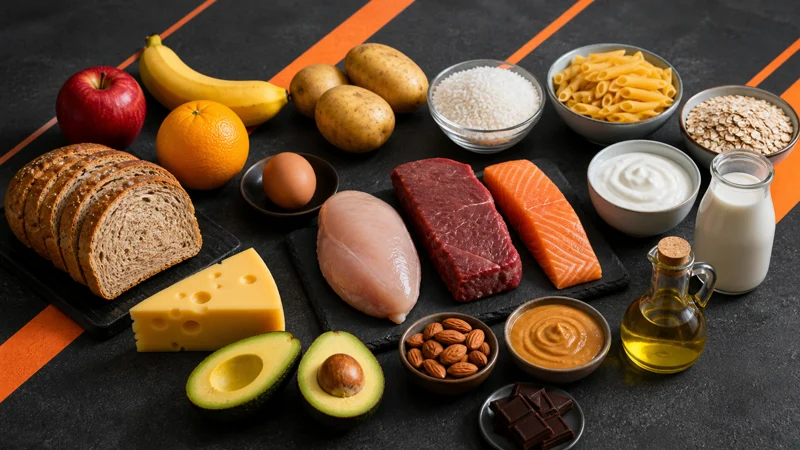
Calories show how much energy food provides. Knowing approximate calorie values can help with weight loss, weight maintenance, or muscle gain, but food quality and portion size matter just as much.
The values below are estimates and may vary by brand, variety, and preparation method.
Calories in 20 Popular Foods
| Food | Calories | Amount |
|---|---|---|
| 1. Apple | 52 kcal | 100 g |
| 2. Banana | 89 kcal | 100 g |
| 3. Orange | 47 kcal | 100 g |
| 4. Boiled potatoes | 87 kcal | 100 g |
| 5. Cooked rice | 130 kcal | 100 g |
| 6. Cooked pasta | 150 kcal | 100 g |
| 7. Oats | 370 kcal | 100 g dry |
| 8. Wholegrain bread | 250 kcal | 100 g |
| 9. Egg | about 70–80 kcal | 1 medium egg |
| 10. Chicken breast | 165 kcal | 100 g cooked |
| 11. Beef | 200–250 kcal | 100 g |
| 12. Salmon | 200–210 kcal | 100 g |
| 13. 2% yoghurt | 60 kcal | 100 g |
| 14. Whole milk | 60 kcal | 100 ml |
| 15. Yellow cheese | 350–400 kcal | 100 g |
| 16. Avocado | 160 kcal | 100 g |
| 17. Almonds | 580 kcal | 100 g |
| 18. Peanut butter | 590 kcal | 100 g |
| 19. Dark chocolate | 550–600 kcal | 100 g |
| 20. Olive oil | 884 kcal | 100 g |
How to Use the Table
Compare foods at the same quantity and check the label. Dry and cooked products can have very different values per 100 g because of water. Oils, nuts, and cheese are concentrated energy sources, while fruit and vegetables usually have a lower energy density.
Calories Are Not the Only Measure
Two foods with the same calories can differ greatly in protein, fibre, vitamins, minerals, and satiety. For a balanced diet, combine vegetables, complete protein, quality carbohydrates, and a moderate amount of healthy fats.
Frequently Asked Questions
How many calories should I eat per day?
Your needs depend on age, sex, weight, height, activity, and goal. An online calculator can provide a starting estimate, which should be adjusted according to real progress.
Do I need to count every calorie?
No. For many people, temporarily tracking portions is enough to build a better understanding of their intake.
Does cooking change calories?
Heating itself does not create calories, but added oils and sauces increase them. Water loss or absorption changes the value per 100 g.
Conclusion
Use calories as a guide, not as the only measure of food quality. The best diet is varied, realistic, and suited to your goal and activity level.