
Blog
How to Use Gym Machines: Adjustments and Your First Steps
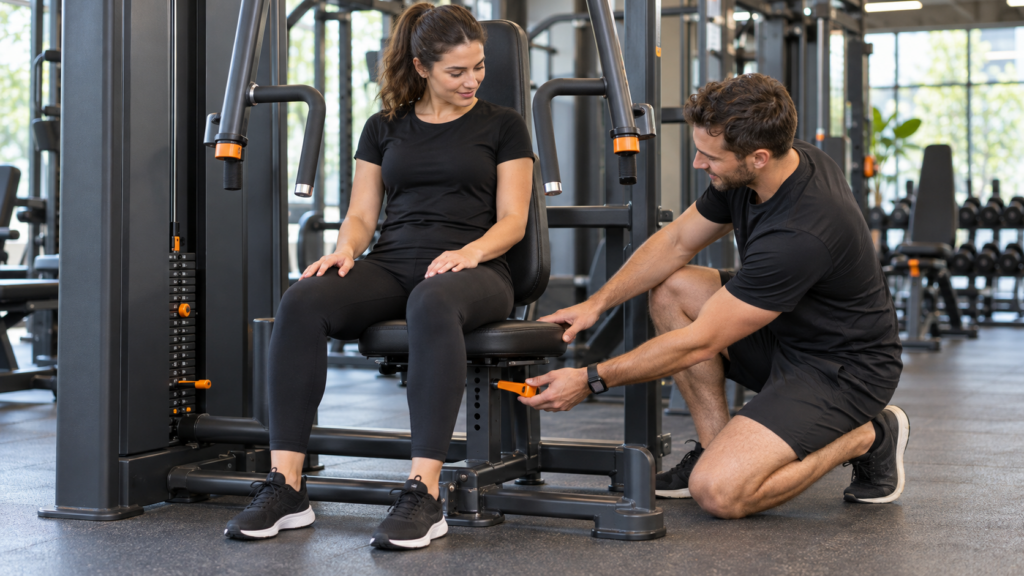
You walk into the gym and see seats with levers, weight stacks with pins and cable machines with different handles. Where do you start? The first step is understanding what a particular machine does and how to adjust it to fit you.
There is no separate category of “gym machines for beginners”. The same machine can be used by people with different levels of experience. Exercise selection, adjustments, resistance and technique are what make its use appropriate for an individual.
First, identify the type of equipment
Not everything in the gym is adjusted in the same way. Common types include:
- Strength machines with a weight stack. Resistance is usually selected with a pin, while the movement follows a set path.
- Plate-loaded machines. These use separate weight plates. Before using one, learn how its stops work and how to enter and leave the starting position.
- Cable machines. These allow different exercises depending on cable height, the attachment and your body position.
- Cardio equipment. Treadmills, exercise bikes, cross-trainers and other models have their own controls, settings and stopping procedures.
The machine’s instruction label is a starting point. Read its name, movement diagram and manufacturer’s guidance. If you do not understand a setting or mechanism, ask an instructor to demonstrate it.
Five things to check before the first repetition
1. The seat and backrest
Seat height changes your position relative to the handles and moving parts. The backrest determines your support and starting position. The previous user’s settings are not automatically right for you.
Make adjustments while the machine is at rest, following its instructions. Check that the pin or locking mechanism is fully engaged before you begin.
2. Supports and pads
Thigh, chest and leg pads have specific purposes. They should provide support in the intended area without forcing you to twist or compensate with an awkward position. Their placement depends on the model and exercise: ask for a demonstration rather than guessing.
3. Starting position and range of movement
Some machines let you adjust the starting position. Do not choose an extreme setting simply because the machine allows it. You should be able to get into position and perform the movement with control. An instructor can help you understand what that looks like for the particular exercise.
4. Resistance
When learning a machine, start with light resistance so you can check the setup and movement. On a weight-stack machine, insert the pin fully into the selected position. Do not move it while the weights are raised or someone else is using the machine.
The numbers on two different machines are not directly comparable. Mechanisms and pulley ratios can differ, so do not automatically transfer the same setting to another machine.
5. Finishing and stopping
Before starting, understand how you will finish. Learn how to return the weights, release the machine and locate the stop control on cardio equipment. For a plate-loaded machine, ask someone to demonstrate the safety mechanisms before adding weight.
Explore the gym in person
A free first visit lets you experience the atmosphere and explore the equipment at your chosen Athletic club. Ask the team who can show you the adjustments on a particular machine.
After you submit the form, the team will process your request and explain the next steps. Individual sessions with a personal trainer must be arranged separately.
Four common machines and what to ask about them
These examples help you recognise equipment; they are not a ready-made workout programme. Equipment and mechanisms vary between gyms and models.
Leg press
On a leg press, you push a platform or move the seat by extending your legs. Designs vary. Ask how to adjust the backrest, where to place your feet, how to release and lock the mechanism and what range of movement suits you. Do not start if you do not know how to return the machine to a secure finishing position.
Chest press machine
You can recognise this by the handles that you push forward from a seated position. Ask someone to demonstrate seat adjustment and the handles’ starting position. You should not need to raise your shoulders or arch your body to reach the handles and move the resistance.
Seated row machine
This is a strength machine where you pull the handles towards your body. It is different from a cardio rowing machine. On models with chest support, ask how to adjust the seat and pad so you can reach the handles and move your arms with control.
Lat pulldown
The attachment starts above your head and is pulled down. Ask about attachment selection, thigh-pad adjustment and getting into the starting position. Do not rely on swinging your body to move the selected resistance.
What to avoid when learning a machine
- Copying the previous user’s settings and weight.
- Moving a lever or pin without knowing what it releases.
- Starting with heavy resistance just to “see if it works”.
- Relying only on a video of a different machine model.
- Continuing through pain or allowing the weights to drop without control.
If a movement hurts or the machine cannot be adjusted to fit you comfortably, stop the exercise and seek assistance. Not every person needs to use every machine.
How to ask for a useful demonstration
Instead of simply asking “How does this work?”, try a specific question: “Could you show me what this machine is for, how to adjust the seat and how to start and finish the movement?” Then repeat the setup under supervision, if possible.
For ongoing help with technique and exercise selection, ask your club about working with a fitness instructor or personal trainer. Individual sessions and their terms must be arranged with the club.
Frequently asked questions
Are there machines only for beginners?
No. Machines are not divided in that way. A suitable choice depends on the exercise, adjustments, the person’s abilities and their goals.
How can I remember my settings?
Once they have been demonstrated, you can note the machine model and the seat and support positions. Check them again before your next use. These notes apply to that specific machine and do not automatically transfer to another one.
Can I explore the equipment before choosing a membership?
You can request a free first visit through Free Pass and follow the instructions provided by the team. This lets you decide whether you like the gym and location.
Start by getting to know the gym
You do not need to learn every machine in one day. Choose a convenient club, explore the equipment and ask for help with the machines you will use. Understanding the movement is a more useful starting point than choosing a weight at random.