
Article
Top 10 Glute Exercises for Women
- Home
- Top 10 Glute Exercises for Women
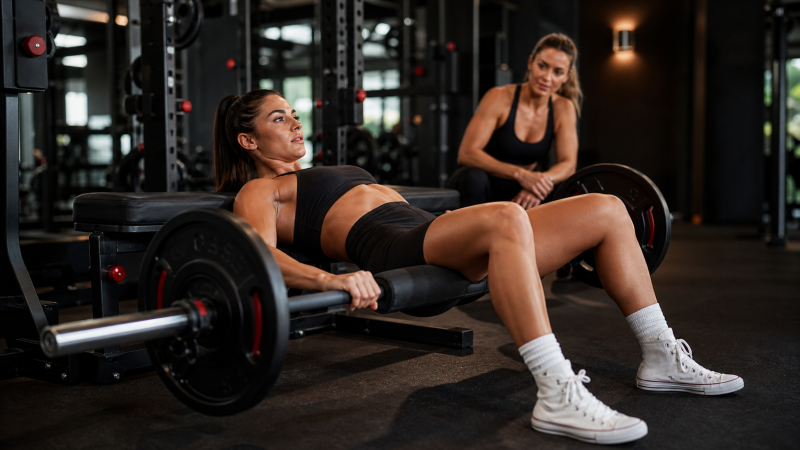
A strong, developed gluteal region is not built with one secret exercise. The glutes extend, abduct and stabilise the hip. Complete development requires several movement patterns, progressive overload, adequate nutrition and recovery. The following ten exercises can be adapted for beginners and experienced trainees.
Understanding the glute muscles
Gluteus maximus is the main driver of hip extension, such as rising from a squat or completing a hip thrust. Gluteus medius and minimus contribute to abduction and stabilise the pelvis during walking, running and single-leg work. A balanced programme combines strong extensions, lengthened positions and lateral work.
Shape and fat distribution are also influenced by genetics. Training can develop muscle and posture, but it cannot choose where the body loses fat.
How often should you train glutes?
Two or three sessions per week are practical for many people. Distribute sets rather than placing everything in one exhausting day. A beginner might start with 8–10 challenging weekly sets and add volume gradually according to progress and recovery.
Leave at least one day between demanding sessions. Soreness is not required for results, while persistent pain and falling strength may indicate excessive stress.
1. Hip thrust
The hip thrust produces high glute tension near the top. Support the upper back on a secure bench, place feet around hip width and raise the pelvis. At the top the shins are approximately vertical, ribs remain controlled and the lower back does not overextend.
Begin with a floor bridge, then add a barbell, dumbbell or machine. Perform three or four sets of 6–12 with a controlled pause at the top.
2. Deep squat
Squats train thighs and glutes, particularly through a controlled depth appropriate to your mobility. Keep the feet stable, allow knees to follow the toes and lower the pelvis between the thighs. Everyone does not need the same stance width or toe angle.
A goblet squat is excellent for learning. Experienced trainees can use a barbell, hack squat or machine. Select a pain-free version with full control.
3. Romanian deadlift
The Romanian deadlift loads the glutes in a lengthened position and develops the hamstrings. Push the hips back with softly bent knees, keep the weight close to the legs and maintain a stable spine. Stop when the stretch is strong but controlled.
Do not turn it into a squat or chase the floor with the lower back. Two to four sets of 6–12 are practical.
4. Bulgarian split squat
This unilateral exercise develops glutes, quadriceps and stability. Place the rear foot on a low support and the front foot far enough forward to descend under control. A slight torso lean and longer stance often increase glute involvement.
Begin with body weight and hand support. Add dumbbells when 10–12 repetitions per side are stable.
5. Step-up
Choose a height that permits the entire foot to remain secure and the pelvis controlled. Drive through the working leg without a large push from the rear foot. Lower slowly. An excessive box height can shorten the useful range and rotate the pelvis.
Use 8–15 repetitions per side and add dumbbells as control improves.
6. Reverse lunge
Stepping backward is often easier to control than lunging forward. Keep the front foot stable and lower the rear knee toward the floor. A longer stride and slight torso lean increase glute contribution.
Alternate legs or finish one side at a time. The front knee does not have to remain behind the toes; comfort, direction and control matter more.
7. Single-leg Romanian deadlift
This combines a hip hinge, balance and pelvic stability. Keep the pelvis facing the floor, extend the free leg backward and maintain a soft support knee. Use a wall or rack when balance limits the target muscle.
A dumbbell in the opposite hand provides effective loading. Complete 8–12 controlled repetitions.
8. Cable kickback
Attach a cuff around the ankle and extend the leg through the glute without arching the lower back or swinging. A small to moderate range is enough. This isolation movement should allow 12–20 clean repetitions.
A resistance band is a home alternative, but progression should be measurable through stronger resistance, more repetitions or better control.
9. Hip abduction
A machine, cable or lateral band walk targets the gluteus medius. Keep movement controlled and avoid rocking the pelvis. With a band, maintain tension and use small deliberate steps.
Perform two or three sets of 12–25 near the end of a session. A burning sensation is not the only criterion; progression still matters.
10. Frog pumps and glute bridges
For frog pumps, bring the soles together, open the knees and raise the pelvis. The range is short and suits a finishing set. A glute bridge is more versatile and can be loaded with a dumbbell or band.
These variations do not replace heavy training, but they add volume with limited systemic fatigue. Use 15–30 controlled repetitions.
How to feel the glutes working
You do not need a strong burn in every set. Check position, range and load. A warm-up set of bridges or abduction may improve control, but do not exhaust the muscle before primary movements. Record a set or ask a trainer for feedback.
If the lower back dominates a hip thrust or hinge, reduce weight, control the ribs and shorten the range. Pain is not a normal training signal.
Example workout A
- hip thrust – 4 sets of 6–10;
- Bulgarian split squat – 3 sets of 8–12 per leg;
- Romanian deadlift – 3 sets of 8–12;
- hip abduction – 3 sets of 15–25.
Example workout B
- squat – 4 sets of 6–10;
- step-up – 3 sets of 10 per leg;
- reverse lunge – 3 sets of 8–12;
- cable kickback – 3 sets of 12–20.
Leave two or three days between sessions. Beginners can use two sets and build gradually.
How to progress
Choose a repetition range. When every set reaches the upper end with good technique and one to three repetitions in reserve, add the smallest available load. Keep a log. More sweat and soreness do not automatically produce more growth.
Cardio and nutrition
Cardio does not prevent glute development when volume is sensible and recovery is adequate. Walking, cycling or moderate intervals support health. Muscle growth requires enough protein and total energy. Fat loss requires a sustainable calorie deficit, but exercise cannot locally remove fat from one area.
Exercise order
Place the movement you most want to improve early in the session, after warming up. Heavy compound work usually comes before isolation. You can alternate emphasis: begin Workout A with hip thrusts and Workout B with squats. This distributes fatigue and develops strength in different positions.
Recovery signs
Normal recovery means soreness decreases, strength is stable or improving and motivation remains reasonable. Reduce volume when soreness persists for many days, performance declines repeatedly or joints hurt. Sleep, protein and total calories influence how much training you can productively tolerate.
Common mistakes
- using only bands without measurable progression;
- too many exercises in one session;
- overextending the lower back in hip thrusts;
- lifting too heavily with a short range;
- training hard every day without recovery;
- expecting local fat loss;
- changing the programme before progress can occur.
Frequently asked questions
How long does it take to see results?
Strength may improve within weeks, but visible development requires months of consistent training and appropriate nutrition.
Are squats enough?
Squats help, but combining them with hip thrusts, hinges and unilateral work develops the glutes more completely.
Do I need weights?
Body weight works initially, but long-term progress requires some form of increasing resistance.
Can I train at home?
Yes. Use unilateral variations, bands, dumbbells and slower tempos while recording progression.
Conclusion
Combine hip thrusts, squats, Romanian deadlifts and unilateral movements, with abduction as a supplement. Train two or three times per week, record load and allow recovery. Consistent progressive work builds stronger and more developed glutes.