
Блог
Personal Trainer in Sofia, Bulgaria: How to Choose the Right Trainer
- Начало
- Блог
- За начинаещи
- Personal Trainer in Sofia, Bulgaria: How to Choose the Right Trainer
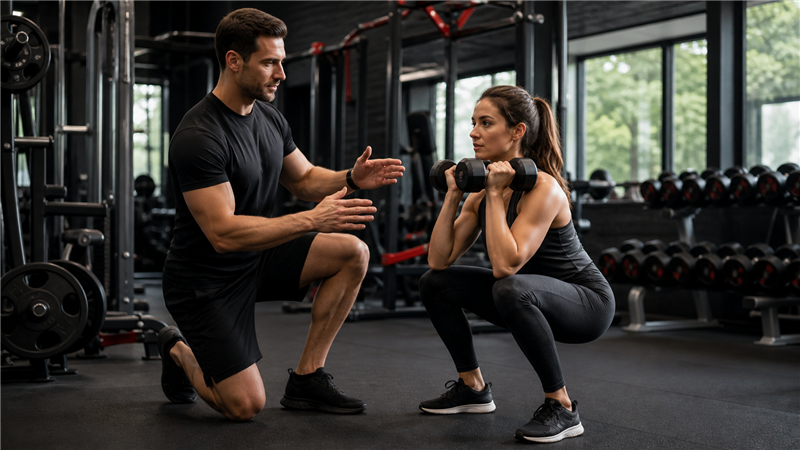
If you are searching for a personal trainer near me while living in or visiting Sofia, Bulgaria, you probably want clearer guidance, better technique and a training plan that matches your goals. A fitness instructor can help you understand the gym and its equipment, while a personal trainer provides scheduled one-to-one support, plans progression and follows your results.
This guide explains the difference, how to choose a qualified professional and what to expect from your first consultation. If you train at Athletic, choose a convenient fitness club and ask the club team which personal training options are currently available at that location.
What does a gym instructor do?
A floor instructor supports members, encourages safe equipment use, and answers brief questions. They can show how to adjust a machine, load plates, locate equipment, and understand the basic form of an exercise.
The exact service varies by club. An instructor usually helps several members, while a personal trainer delivers a scheduled one-to-one session and develops a detailed plan for an individual client.
Fitness instructor or personal trainer near you?
A gym instructor is suitable for orientation, short technique questions, and help with the facility. A personal trainer dedicates individual time, performs an assessment, plans progression, observes the complete session, and adapts the programme. Personal training may suit complex goals, previous injuries, or a need for accountability.
Neither an instructor nor a trainer should diagnose a medical condition. Pain, illness, pregnancy, or recovery after surgery may require coordination with an appropriate healthcare professional.
1. They help you navigate the gym
A short tour saves time and reduces anxiety. You learn where to find cardio equipment, free weights, machines, stretching areas, and functional tools. The instructor can explain rules for sharing stations, returning weights, and leaving equipment safely.
Ask how lockers work, where water is available, and what to do if equipment has a fault. Confidence begins with understanding the environment.
2. They demonstrate machine setup
Seat, backrest, and pad positions should match your height and proportions. An unsuitable setup can limit movement or create discomfort. An instructor can show the starting position and how to release and return the resistance safely.
Record settings on your phone, such as the seat number. The next workout will begin faster and you will not rely on memory.
3. They improve exercise technique
Sound technique distributes load according to the purpose of the exercise and allows control. An instructor may correct posture, knee direction, shoulder-blade position, tempo, and breathing. A correction does not mean failure; it is a normal part of learning.
Ask for one or two clear cues instead of ten at once. Practise them before adding another detail. Film a short set only when club rules and the privacy of people nearby allow it.
4. They reduce avoidable risk
No sport is risk-free, but appropriate progression and correct equipment use reduce preventable mistakes. An instructor can demonstrate rack safety arms, collars, and how to begin and finish a set.
Ask for a spotter during appropriate heavy sets. Do not rely on someone who does not understand the movement. Sharp pain, dizziness, or unusual breathlessness are reasons to stop.
5. They help choose a suitable load
Beginners often select resistance that is too heavy or too light. A suitable load allows the planned repetitions with stable technique and a few repetitions in reserve. An instructor can guide the first trial set.
Progress is not only adding weight. Better control, a useful range of motion, and another quality repetition are also improvements.
6. They save time
Without a plan, it is easy to wander between machines or wait unnecessarily. An instructor can suggest an alternative when a station is occupied and explain how to combine exercises without disrupting other members.
A focused short workout is more useful than two unstructured hours. Begin with priority movements, then add accessory work and cardio according to the goal.
7. They provide realistic direction
A good professional does not promise dramatic change in days. They help make a goal measurable and appropriate to experience, such as completing three workouts per week, learning five basic movements, or gradually increasing training loads.
If you need a detailed programme, nutrition support, or constant supervision, ask which personal service is available and exactly what it includes.
8. They support consistency
A familiar professional in the gym makes questions easier and reduces uncertainty. Brief feedback can prevent weeks of confusion. A personal trainer also adds a scheduled appointment, which can help someone who struggles to maintain a routine.
The long-term goal should be increasing independence. A good professional explains why a decision is made instead of creating dependence.
What happens during a first consultation?
Prepare information about experience, goals, available time, previous injuries, and medical restrictions. The professional may ask which activities you enjoy and how many days you can realistically train. An orientation and demonstration of basic exercises often follows.
The first session does not need to be maximal. It should gather useful information and leave enough capacity to recover.
How to recognise a good professional
- asks questions before recommending a programme;
- explains clearly and checks your understanding;
- adapts exercises to ability and limitations;
- does not use humiliation or fear as motivation;
- respects boundaries and asks before physical contact;
- does not diagnose outside their scope;
- tracks progress and changes the plan for a reason;
- uses realistic language about results.
Questions to ask
Ask about education, qualifications, experience with clients like you, and how progress is measured. Clarify price, duration, cancellation policy, and whether a programme outside sessions is included. For a specific health condition, ask whether the trainer has experience collaborating with healthcare professionals.
Warning signs
Be cautious with guaranteed rapid results, extreme diets, pressure to purchase multiple supplements, ignoring pain, or demanding complete exhaustion in every workout. Your programme should reflect you rather than copy the trainer’s own routine.
Getting the most from a session
Arrive on time, describe how you recovered from the previous workout, and report pain or unusual symptoms. Keep a training record and ask what you should practise independently. Honest feedback helps the trainer adjust the plan.
Between sessions, follow the agreed programme rather than adding random challenges from social media. Progress becomes easier to assess when the main variables remain consistent.
Frequently asked questions
Do beginners need an instructor?
A short orientation and technique support are very useful. Personal training is optional when you want an individual programme and ongoing supervision.
Can an instructor write a meal plan?
That depends on qualifications and local rules. Seek a registered dietitian or physician for medical nutrition needs.
How many personal training sessions do I need?
There is no universal number. Some people need several technique sessions, while others prefer long-term coaching.
What should I bring to the first meeting?
Comfortable clothing, suitable shoes, water, and information about important restrictions or medical recommendations.
Should a trainer make every session extremely hard?
No. Training should match the plan. Technique sessions, easier weeks, and controlled workloads are all legitimate parts of progress.
How to find a personal trainer in Sofia
Location matters because a trainer and schedule that are easy to reach make consistency more realistic. Review the Athletic clubs in Sofia, choose the most convenient location and contact the club directly to confirm the current personal training services, availability and booking conditions.
If you want to experience the gym before choosing a membership, request an Athletic Free Pass. Use the visit to see the training areas, ask practical questions and decide what level of support you need.
Conclusion
A fitness instructor can make the gym easier to understand and training more organised and safer. Use floor support for orientation and technique, and personal training when you need an individual plan and accountability. Ask questions, choose a qualified professional, and look for an approach that gradually builds your own knowledge and confidence.